Commercial Solar Installations Sunshine Coast: Save More in 2025

Queensland electricity prices hit record highs in 2024, with commercial businesses facing increases of up to 25% on their power bills. If you're running a warehouse, retail space, or manufacturing facility on the Sunshine Coast, that's a significant chunk of your operating costs walking straight out the door. But here's the thing: commercial solar installation on the Sunshine Coast isn't just an environmental choice anymore—it's a financial necessity that's paying businesses back faster than ever before.
In this guide, you'll discover how commercial solar systems can slash your energy expenses, the real ROI timelines businesses are experiencing in 2025, and why the Sunshine Coast's climate makes it one of Australia's most lucrative regions for solar investment.
Why Sunshine Coast Businesses Are Rushing to Solar in 2025
The numbers tell a compelling story. According to the Clean Energy Council, commercial solar installations across Queensland grew by 34% in 2024, with the Sunshine Coast leading regional adoption rates. Three factors are driving this surge.
First, electricity costs continue their upward trajectory. The Australian Energy Market Operator forecasts another 15-20% increase for commercial users by mid-2026. Second, solar technology costs have dropped 89% since 2010, making the upfront investment more accessible than ever. Third, government incentives and accelerated depreciation schemes are creating immediate tax advantages that business owners can't ignore.
Solar energy savings on the Sunshine Coast aren't theoretical—they're measurable and substantial. A typical 100kW commercial solar system generates approximately 450-500 kWh daily on the Sunshine Coast, thanks to our average 7+ hours of peak sunlight. For a business consuming 400kWh per day, that translates to 80-90% energy self-sufficiency.
The Real Cost Savings: Breaking Down Commercial Solar ROI
Let's get specific about what commercial solar installation on the Sunshine Coast actually saves. A medium-sized commercial operation spending $3,500 monthly on electricity can expect these outcomes:
Immediate Impact:
Monthly electricity bills drop by $2,450-$2,800 (70-80% reduction)
Annual savings: $29,400-$33,600
Small Business Energy Incentive: Up to $20,000 instant asset write-off for systems installed before June 2025
Long-Term Returns:
Average payback period: 3.5-4.5 years
25-year system lifespan generates $735,000-$840,000 in total savings
ROI: 250-350% over system lifetime
Protection against future electricity price increases (hedge value)
These figures use conservative 2025 electricity rates of $0.32/kWh for commercial users. With forecasted increases, actual savings typically exceed projections by 15-20%.
The Small Business Energy Incentive deserves special attention. Eligible businesses can claim bonus deductions of 20% on top of standard depreciation for assets under $100,000, including solar systems. For a $60,000 solar installation, that's an additional $12,000 tax deduction in year one.
How Commercial Solar Systems Reduce Operating Costs Beyond Electricity
While energy bill reduction grabs headlines, commercial solar systems on the Sunshine Coast deliver hidden financial benefits that amplify ROI.
Demand Charge Elimination: Many commercial electricity tariffs include demand charges based on your peak 30-minute usage period. Solar generation during business hours flattens these peaks, potentially saving $500-$1,200 monthly on facilities with high demand charges.
Battery Storage Integration: Pairing solar with battery systems allows you to store excess generation and deploy it during evening peaks or grid outages. The average commercial battery system (30-50kWh) adds $450-$650 in monthly savings while providing backup power worth thousands in prevented downtime.
Increased Property Value: Commercial real estate with solar installations commands 4-6% higher sale or lease prices, according to 2024 Australian Property Institute data. For a $2 million commercial property, that's $80,000-$120,000 in added value.
Environmental Impact: The Sustainability Case for Solar
Beyond dollars, commercial solar installation contributes measurably to environmental goals that increasingly matter to customers, investors, and regulators.
A 100kW commercial solar system on the Sunshine Coast prevents approximately 150 tonnes of CO₂ emissions annually—equivalent to removing 33 passenger vehicles from the road. Over 25 years, that's 3,750 tonnes of avoided emissions.
For businesses pursuing B Corporation certification, carbon neutral status, or ESG reporting requirements, solar provides quantifiable sustainability metrics. The renewable energy generated and emissions prevented become powerful marketing assets that resonate with environmentally conscious consumers.
Research from Nielsen shows 73% of Australian consumers prefer purchasing from sustainable businesses, with 46% willing to pay premium prices. Your solar installation becomes a visible commitment to environmental responsibility that differentiates your brand.
Government Incentives Maximizing Solar Investment Returns
Queensland's 2025 renewable energy incentives create unprecedented opportunities for commercial solar adoption. Understanding these programs is crucial for maximizing financial returns.
Small-Scale Technology Certificates (STCs): Commercial systems under 100kW qualify for STCs, reducing upfront costs by $15,000-$25,000 depending on system size. These certificates are typically assigned to the installer, lowering your purchase price immediately.
Large-Scale Generation Certificates (LGCs): Systems over 100kW generate LGCs based on actual renewable energy production. These certificates trade on the open market, creating an additional revenue stream worth $2,000-$5,000 annually for larger installations.
Queensland Business Development Fund: Eligible manufacturers and agricultural businesses can access low-interest loans covering up to 50% of renewable energy project costs, with repayment terms up to 10 years.
The combination of federal incentives and accelerated depreciation means many businesses recover 40-50% of their solar investment in year one through tax benefits and rebates alone.
Sunshine Coast Climate Advantage: Why Location Matters
Geography significantly impacts solar performance, and the Sunshine Coast offers exceptional conditions for commercial solar energy production.
With 2,800+ sunshine hours annually and average daily solar radiation of 5.5-6.0 kWh/m², the region ranks among Australia's top-performing solar locations. This translates to 15-20% higher energy generation compared to southern states, directly improving ROI timelines.
Our subtropical climate provides consistent year-round generation without the extreme temperature variations that reduce solar panel efficiency in inland regions. Coastal proximity means fewer dust accumulation issues compared to drier areas, reducing cleaning frequency and maintenance costs.
The Sunshine Coast's growing business ecosystem—from Maroochydore's emerging CBD to Caloundra's industrial zones—features modern commercial buildings with optimal roof orientations and minimal shading, perfect for maximum solar deployment.
Choosing the Right Commercial Solar System Size
System sizing directly impacts your return on investment. Oversizing wastes capital; undersizing leaves money on the table. Here's how to determine the optimal capacity for your business.
Analysis starts with consumption patterns. Review 12 months of electricity bills to identify your daily usage (kWh), peak demand periods, and seasonal variations. A business consuming 500kWh daily during business hours would typically install a 120-150kW system for optimal self-consumption.
Consider these factors:
Roof space availability: Each kW requires approximately 6-8 square meters
Business growth projections: Plan for 20-30% increased consumption over 5 years
Export limitations: Energex imposes grid export limits on larger systems
Budget constraints: Staged installation allows capacity expansion over time
Most Sunshine Coast commercial installations fall between 30kW and 250kW, with 80-100kW being the sweet spot for medium-sized operations balancing cost, production, and available roof space.
Real Business Success Stories: Commercial Solar on the Sunshine Coast
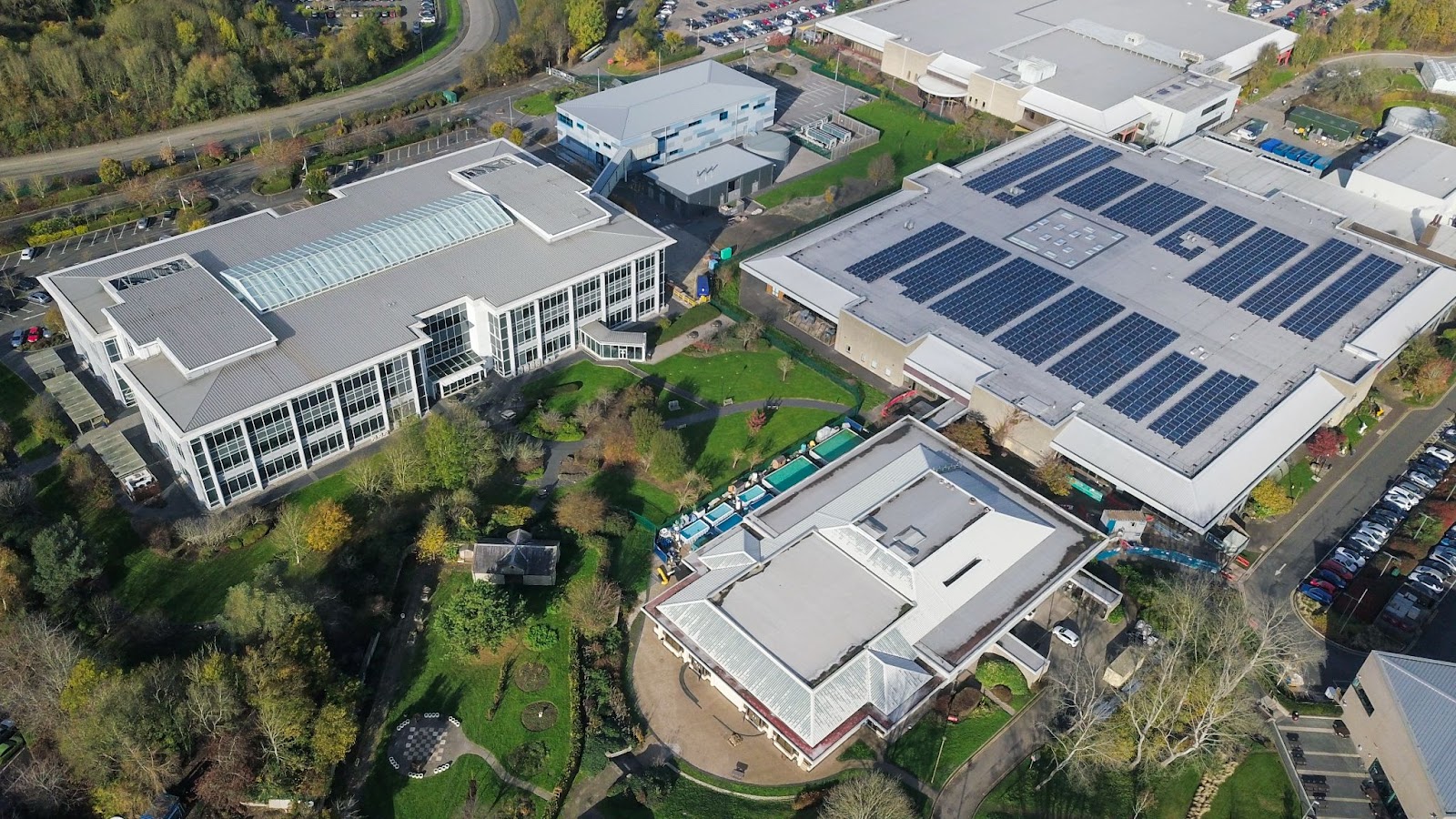
Local businesses are already reaping substantial benefits from commercial solar installation. A Maroochydore warehouse facility installed a 150kW system in early 2024 and reported 82% electricity bill reduction in the first six months—annual savings exceeding $48,000.
A Caloundra manufacturing operation combined 200kW solar with 100kWh battery storage, achieving complete energy independence during production hours. Their maintenance manager noted that preventing just one four-hour production halt during a grid outage justified the entire battery investment.
A Nambour cold storage facility faced crippling demand charges before solar. Their 180kW installation eliminated peak demand spikes, cutting monthly bills from $7,200 to $1,850—a 74% reduction that paid back the system in 3.2 years.
These aren't outliers—they represent typical outcomes for properly designed commercial solar installations on the Sunshine Coast.
Taking the Next Step Toward Energy Independence
Commercial solar installation on the Sunshine Coast represents one of the most financially sound business decisions available in 2025. With electricity costs climbing, government incentives at historic highs, and technology more affordable than ever, the opportunity window won't stay open indefinitely.
The businesses thriving over the next decade will be those that proactively manage energy costs rather than accepting them as fixed overhead. Solar transforms electricity from an unavoidable expense into a controlled, predictable cost with immediate and long-term returns.
Start by analyzing your current energy consumption and calculating potential savings based on your specific usage patterns. Most commercial solar companies offer free site assessments and detailed ROI projections without obligation. Since 2015, Halcol Energy has helped Sunshine Coast businesses take control of their energy costs through commercial solar solutions designed for Australian conditions and backed by comprehensive support.
Is your business ready to join the commercial solar revolution, or will rising electricity costs continue eroding your bottom line?
FAQ Section
How long does commercial solar installation take on the Sunshine Coast?
Most commercial solar installations complete within 4-8 weeks from signed contract to operation. This includes engineering design (1-2 weeks), equipment procurement (2-3 weeks), installation (3-7 days depending on system size), and Energex grid connection approval (1-2 weeks). Larger systems over 100kW may require additional engineering and approval time.
Can I install commercial solar if my building has a metal roof?
Absolutely. Modern mounting systems accommodate all commercial roof types including metal, concrete tile, and TPO membrane. Metal roofs actually offer advantages with faster installation and excellent structural integrity. Professional installers assess roof condition and load-bearing capacity during the design phase to ensure safe, compliant installation.
What happens to excess solar energy my business doesn't use?
Excess solar generation exports to the grid, earning feed-in tariff credits (typically $0.05-$0.10/kWh for commercial customers). However, maximizing self-consumption delivers better returns since you avoid purchasing grid electricity at $0.30+/kWh. Battery storage or load-shifting strategies optimize solar value by storing excess energy for evening use.
Do commercial solar systems work during power outages?
Standard grid-connected systems automatically shut down during outages for safety reasons, protecting utility workers. However, adding battery storage with backup capabilities allows your system to provide emergency power during grid failures. This feature is increasingly popular for businesses requiring uninterrupted operations like cold storage, healthcare facilities, and data centers.
How does weather affect commercial solar system performance?
Solar panels generate electricity from sunlight, not heat, so they actually perform more efficiently in cooler weather. Cloudy days reduce output by 50-80% compared to clear days, but panels still generate power. The Sunshine Coast's high annual sunshine hours and mild climate provide exceptional overall performance, with seasonal variations of only 20-30% between summer and winter production.


Comments
Post a Comment